header


EDGES:

Edges refer to the outer periphery of the petals and occasionally the sepals.

1) Edges can be structural, i.e. have knobs, braids, tentacles, fringe, and teeth.

edges

Photo by Patrick Stamile, used with permission.

a) This bloom shows knobs, braids, tentacles, and fringe. Cultivar: MAGIC LAKE

edges

Photo by Patrick Stamile, used with permission.

b) Shows a double with teeth. 0199


2) Edges can also be of a different color. If the edge is narrow and gold, silver, or white, it is referred to as a wire edge.

edges

Photo by Patrick Stamile, used with permission.

a) Shows a gold wire edge on a double. KEATS

edges

Photo by Patrick Stamile, used with permission.

b) Shows a white wire edge on a double. 0223-C


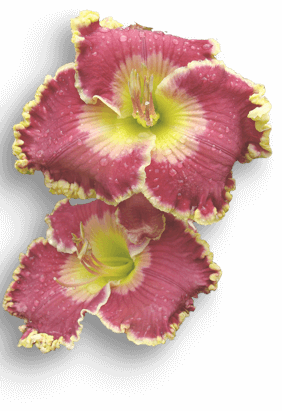
3) Edges of a different color or colors can be narrow (referred to as a picotee) or wide (referred to as a border).

edges

Photo by Patrick Stamile, used with permission.

a) Shows a picotee edge.

edges

Photo by Patrick Stamile, used with pPhoto by Patrick Stamile, used with permission.

b) Shows a border. 0308-A

edges

Photo by Patrick Stamile, used with permission.

c) Shows a multiple colored border of brown and gold, sometimes called a multiple edge. Cultivar: SEDONA (Stamile)


4) Some structural edges reach down into the surface of the flower. These super sculpted edges give a three-dimensional quality to the flower.

edges

Photo by Patrick Stamile, used with permission.

a) Shows a super sculpted edge. 9


Return to Terms Page

Return to Daylily Image Map

Return to AHS Home Page


© Copyright 2000, 2007 by the American Hemerocallis Society, Inc.
footer