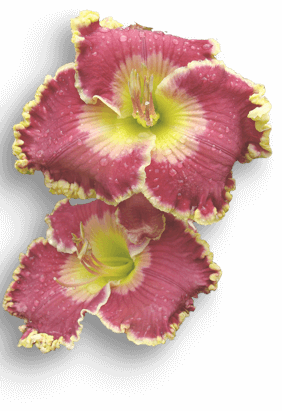
HEMEROCALLIS
GALL MIDGE - Contarinia quinquenotata is
a small fly which has been a pest of daylilies in
Europe for some time and has recently been identified
in British Columbia, Canada (Summer 2001). Damage in
BC is evident between April and July depending on location.
Maggots develop inside daylily flower buds causing
them to become inflated, distorted and unable to open
properly. There is just one generation per year and
the pest favors yellow-flowered early blooming daylilies.
Infested buds may contain a hundred or more small white
legless larvae up to around 0.12" in length which,
when sufficiently mature, fall to the ground where
they overwinter. In spring they emerge as adults and
fly to daylily buds to lay their eggs. Treatment involves
removing affected buds as soon as it is obvious that
they have been attacked. These buds must then be destroyed
so that the maggots cannot continue their life cycle.Because
the daylily gall midge infests flower buds and spends
part of its life cycle in the soil, daylilies without
buds and free of soil or growing medium present less
risk of introducing this pest to one's garden and neighborhood
than daylilies purchased in containers or with scapes
still intact.
Additional
information from the Royal Horticultural Society available here. |