 |
|
 |
| |
EUROPEAN
EARWIG - is not a native insect, but introduced
to North America and first discovered in Rhode Island
in the early 1900's. There are also native earwigs,
but they are considered mostly beneficial. The European
Earwig, Forficula auricularia, is about
three quarters of an inch long and has pincers at
the rear. They feed mostly at night, and are often
especially abundant near outdoor lighting. Their
life cycle is particularly interesting in that the
mother actually tends the young until they are old
enough to fend for themselves. There may be one or
two generations a year. The young earwigs damage
many different plants mostly by eating holes in leaves.
Adults feed on flowers and fruit, and can often be
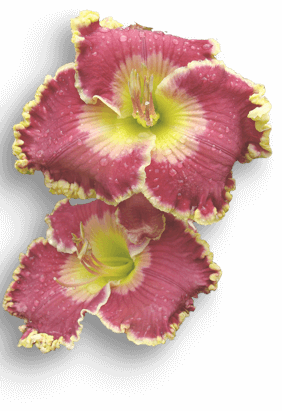
seen in daylily blooms early in the morning. Where
an earwig or two can be seen in a daylily
bloom, there will frequently be many more hiding
in the bases of fans between the leaves where their
droppings make a considerable mess. Insecticidal
soap is effective if you can score a direct hit. |
Used
with permission from University of California Statewide IPM Project,
Jack Kelly Clark, photographer. Any additional uses of this image
must be received from the copyright holder directly - AHS does
not have permission to grant additional usage of this image for
any purposes.

Photo by Sue Bergeron, used with permission.
|
©
Copyright 2000, 2007, 2012 by the American Hemerocallis Society, Inc.
|
|
|
|
 |
|
|